


Alienware’s $699 AW3226Q finally makes OLED feel like a no-brainer for both work and play. Its gorgeous 32-inch 4K Tandem OLED panel delivers stunning colors, deep blacks, and fantastic gaming performance, while the new RGB-stripe subpixel layout fixes the distracting text fringing that’s long plagued OLED monitors. Sure, 165Hz won’t satisfy hardcore esports junkies, and the connectivity is pretty bare-bones. But Alienware made the right compromises in the right places. This is the first OLED monitor I’d happily stare at all day for work, then fire up games on all night. And at $699, that’s a remarkable achievement — and it looks stunning in action.
Price When Reviewed
This value will show the geolocated pricing text for product undefined
Best Pricing Today
$699
I’ve been waiting for ages for an OLED monitor like the Alienware AW3226Q.
Not because it’s the fastest OLED monitor I’ve ever used. It isn’t. Not because it’s the cheapest, either. I reviewed Alienware’s shockingly affordable $350 AW2726DM earlier this week, and that 1440p OLED actually hits a much faster 240Hz.
The AW3226Q is special because it’s the first OLED I’ve used that feels truly uncompromised as an everyday PC monitor.
I’m a writer. I spend most of my working life staring at Word documents, web browsers, spreadsheets, Slack, and all the other decidedly booooring things people actually do with their computers. Traditional OLED gaming monitors have always come with an asterisk for that sort of work: Their unusual subpixel layouts can create visible color fringing around text.
Then, when the workday ends, I’m an intensely competitive gamer who regularly slays noobs at 240Hz and beyond.
Those two sides of my PC life have traditionally wanted different monitors. I’m a filthy monitor pervert who actually swaps out several different models depending on what I’m working on or playing.
But the 32-inch, 4K Alienware AW3226Q finally makes me want the same display for both. At $699, that’s a hell of an accomplishment.
RGB stripe is the real breakthrough
When Alienware announced the AW3226Q, I immediately zeroed in on its new RGB-stripe Tandem OLED panel. I had already seen LG Display’s new RGB-stripe technology at CES, and while improved OLED brightness and other technical advancements are always welcome, this seemingly boring change was the one that really grabbed my attention.
Why? Text.
Most OLED gaming monitors don’t use the conventional red, green, and blue subpixel arrangement that Windows expects, which can result in colored fringes around fine text. Higher pixel densities help mask the effect, and some people are more sensitive to it than others. But once you notice it, it’s hard to stop noticing it.
I notice it.
I certainly noticed it on Alienware’s $350 AW2726DM earlier this week. That monitor is an absolutely killer value for gaming, but between its dimmer panel and visible text fringing, I wouldn’t want to use it as my primary work display.
The new Alienware AW3226Q is different, and you can see its difference in the screenshots above — the left image is Alienware’s new display, while the right image shows text fringing on the otherwise excellent Corsair Xeneon Flex from a couple years back. The Alienware’s traditional RGB stripe makes text look crisp and clean in a way I’m simply not accustomed to seeing from an OLED gaming monitor. Text fringing is all but eliminated. I’ve spent hours working on the AW3226Q, and Word documents and web pages just look right.
That matters more to me than another hundred hertz ever could.
OLED monitors have already conquered gaming. Their perfect blacks, luscious colors, and virtually instantaneous pixel response make them phenomenal for it. Making it just as good for the boring stuff you do between sessions? That’s been the real challenge.
Alienware finally cracked it.
And the image quality is glorious
Brad Chacos/Foundry
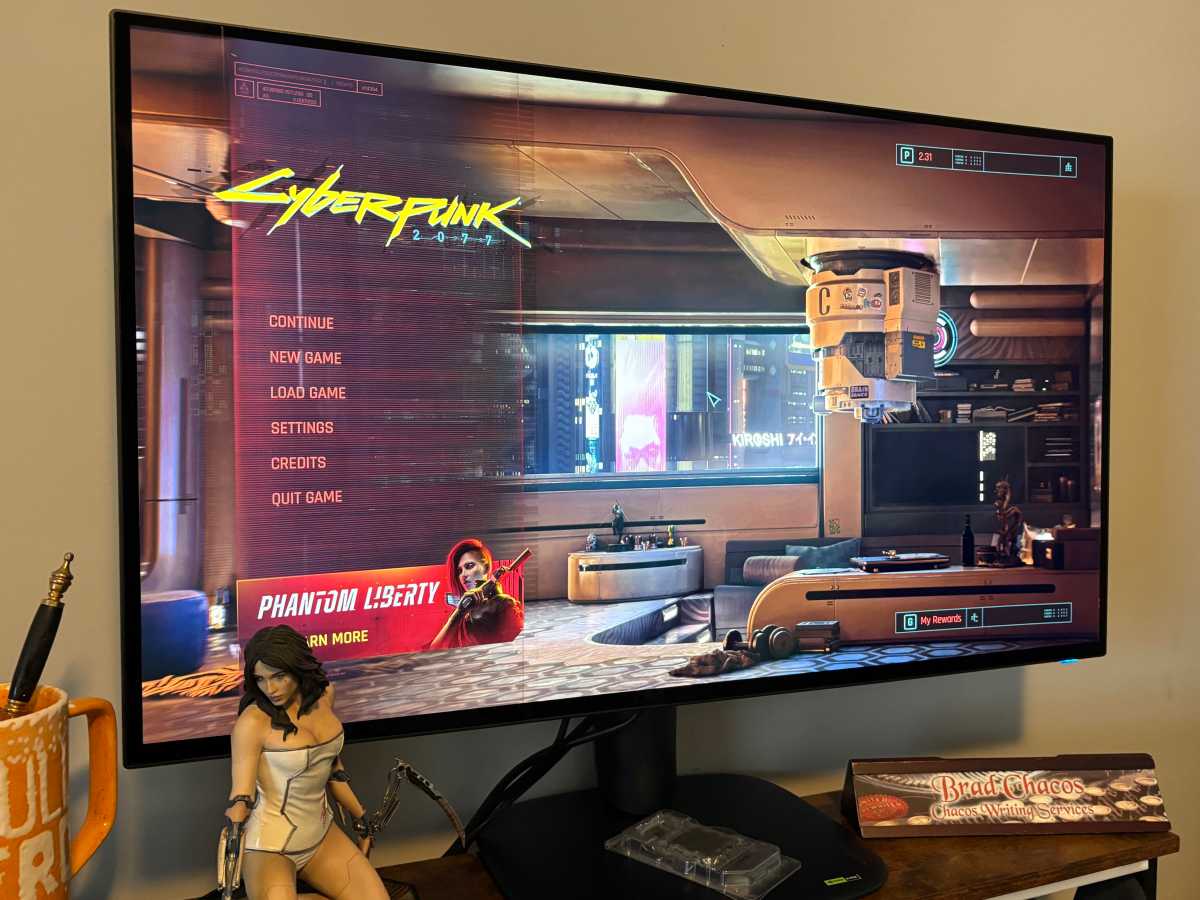
Don’t let all this talk about Microsoft Word give you the wrong impression. The AW3226Q absolutely rips when it’s time to play. It’s jaw-dropping in action.
The glossy 4K Tandem OLED panel is bright, vibrant, and bursting with contrast. Colors leap off the screen against OLED’s wonderfully deep blacks. Games look sharp at 4K across the 32-inch display, and everything has the sort of visual punch that makes going back to a conventional LCD difficult. Playing around with Alan Wake 2 on this do-it-all beast is simply magnificent.
It’s especially striking after spending time with Alienware’s $350 OLED. I love what Alienware accomplished there, but you can see some of the compromises required to hit that price. Its panel runs darker than I’d like, while the AW3226Q is playing in another league. Everything just has more punch here.
And 4K across 32 inches is a fantastic match. Games look razor-sharp, while the large, high-resolution screen provides plenty of room to spread out when you’re actually getting things done.
The AW3226Q isn’t merely a great gaming display that I can tolerate for work. It’s excellent at both. Finally.
About that 165Hz refresh rate
There’s one obvious objection to calling the Alienware AW3226Q a no-compromises monitor: Its refresh rate tops out at 165Hz.
That’s substantially slower than the 240Hz OLED I reviewed earlier this week, never mind the 360Hz, 480Hz, and even faster displays available to esports diehards these days.
And I can tell the difference.
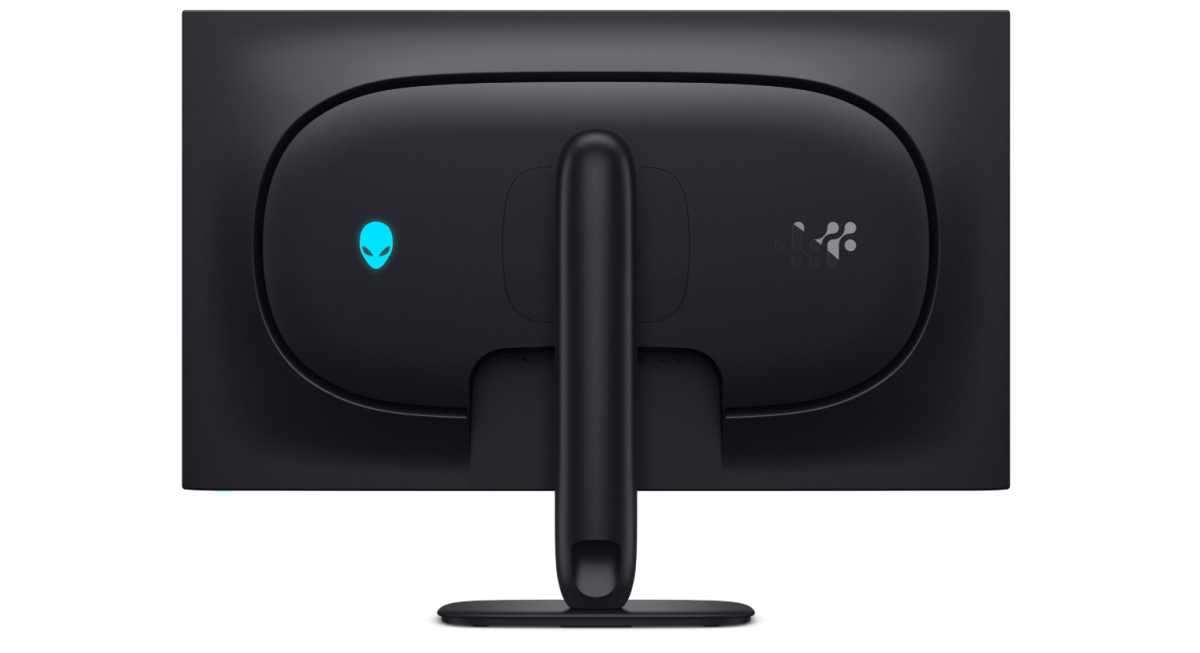
I’ve become accustomed to 240Hz-and-faster monitors for competitive gaming. Dropping back to 165Hz isn’t some imperceptible distinction that exists only on a spec sheet. If you’re the sort of person who tunes every graphics setting for maximum frames and minimum latency, there are better monitors for that specific job.
For everybody else, 165Hz is fantastic.
OLED’s lightning-fast pixel response keeps motion crisp, and 165Hz is plenty fast enough to make everything from shooters to sprawling single-player adventures feel wonderfully smooth and responsive. It’s also worth remembering what we’re talking about driving here: 4K games at up to 165 frames per second. Even today’s monstrous graphics cards can have their hands full trying to do that in cutting-edge games.
Would I prefer this exact monitor at 240Hz? Of course.
Would I pay substantially more or sacrifice the things that make the AW3226Q so good everywhere else to get it? Nope.
A compromise can exist on a spec sheet without meaningfully compromising the experience. Alienware nailed the balance here.
Alienware compromised in the right places
You can see the same philosophy elsewhere.
The AW3226Q doesn’t have built-in speakers. DisplayPort tops out at 1.4 rather than DisplayPort 2.1. You don’t get the sort of elaborate USB-C docking setup found on productivity-focused displays.
None of that bothers me. Give me the fantastic panel at a great price and cut the extras.
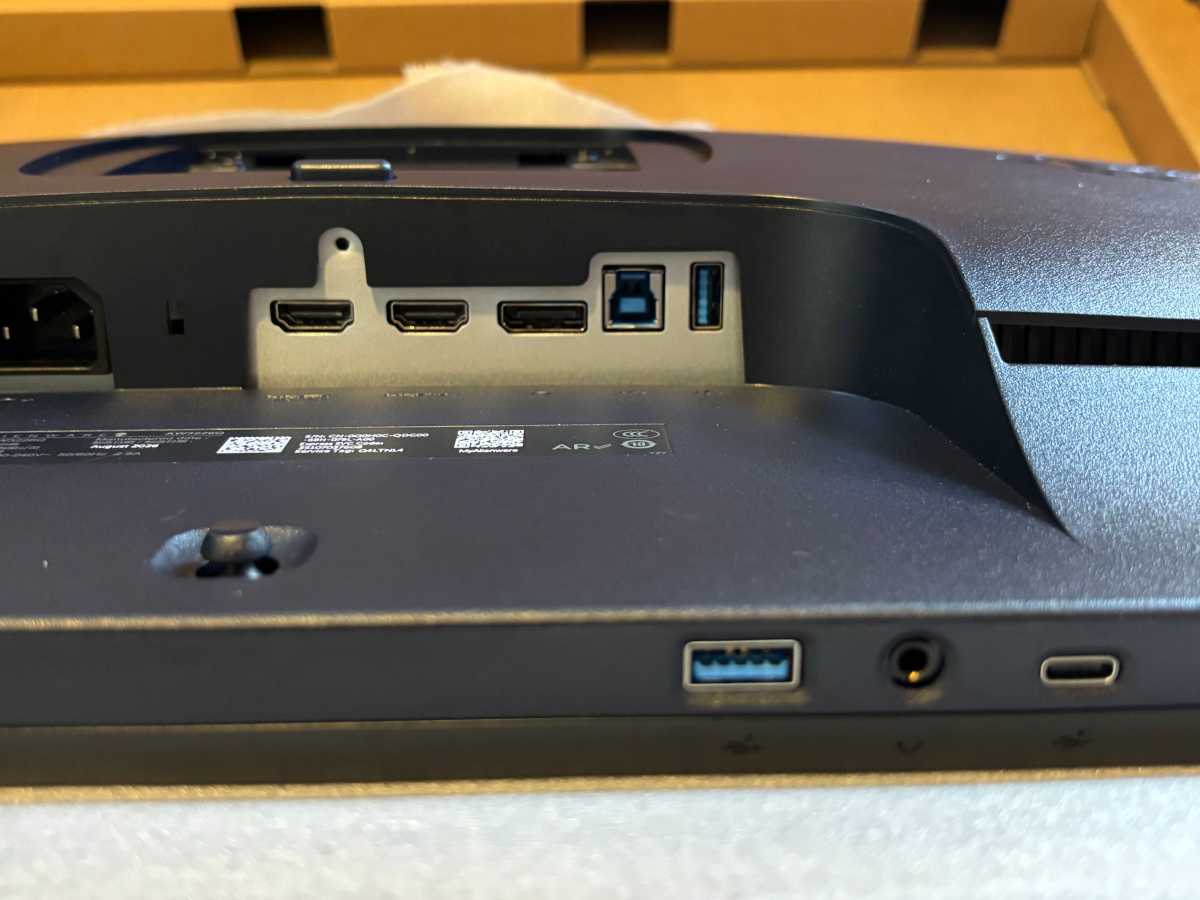
The humble port selection on the Alienware AW3226Q.
Brad Chacos/Foundry
Alienware seems to be settling into a compelling strategy with its latest OLED monitors: Spend the money on the screen and ruthlessly attack the price everywhere else.
The $350 AW2726DM is the extreme expression of that idea. Strip things down, accept some compromises in brightness and desktop use, and deliver the core OLED gaming experience at a price I would’ve considered ludicrous not long ago.
The $699 AW3226Q takes that philosophy upscale. You get a spacious 32-inch 4K Tandem OLED panel with a glossy finish, crisp RGB-stripe text, excellent gaming responsiveness, HDMI 2.1, and a three-year warranty that covers OLED burn-in.
Alienware skipped some luxuries, but it didn’t cheap out on the parts of the monitor I actually care about. I’ll take that trade every time.
Bottom line: The Alienware AW3226Q is what I wanted OLED monitors to become
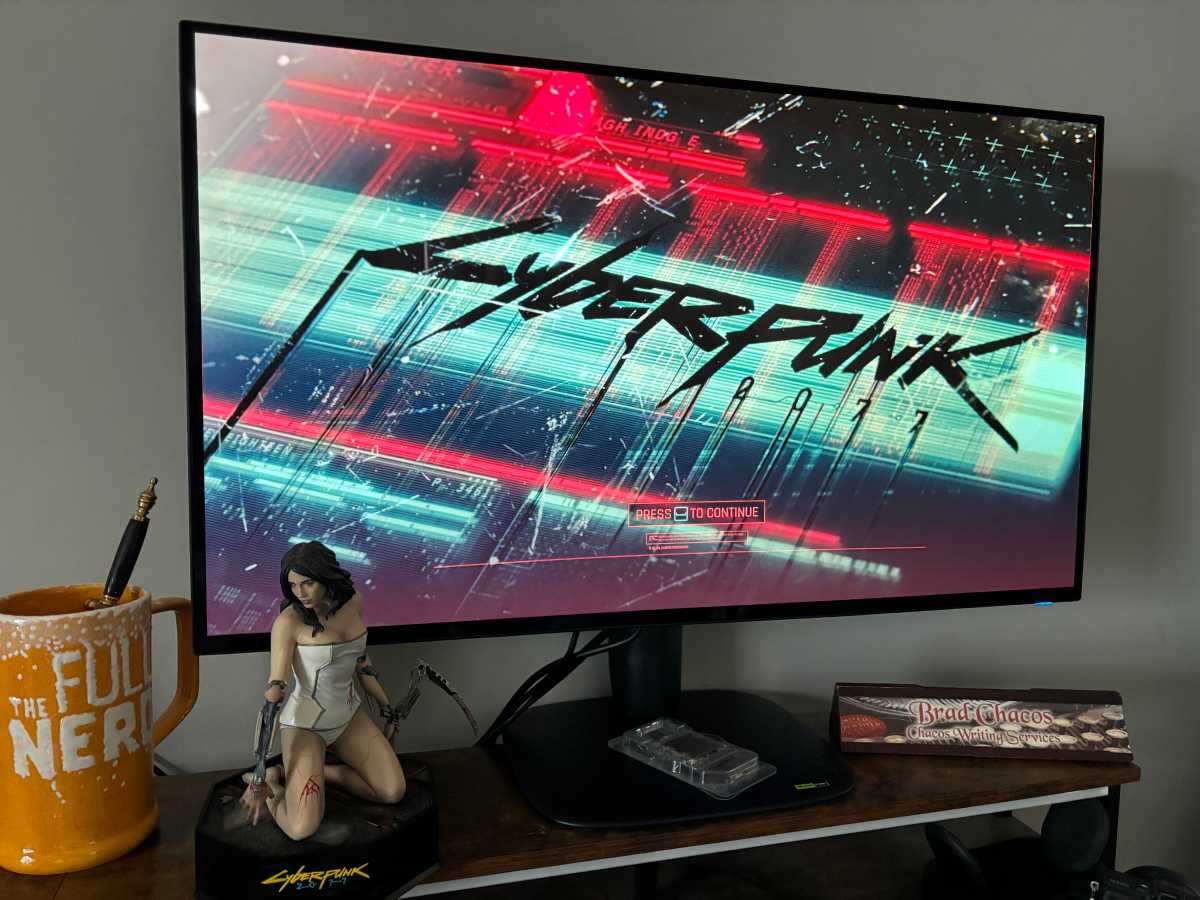
Cyberpunk and my old writing business pen holder: Only this OLED monitor nails the mix For work and play.
Brad Chacos/Foundry
A year ago, I couldn’t buy this combination.
We’ve had spectacular OLED gaming monitors for years. Fast ones, cheap ones, gorgeous ones. But none I’d happily use for both work and play.
The Alienware AW3226Q changes that.
During the day, I get a large, sharp 4K desktop with crisp text that doesn’t constantly remind me I’m using an OLED. When work ends, I get the deep blacks, vibrant colors, stunning contrast, and instantaneous response that make OLED gaming so sublime.
For $699!
There are monitors better suited to specific niches. I’d pick something faster if competitive gaming was my only priority. Someone building an elaborate one-cable laptop workstation may care more about connectivity than I do.
But I don’t need the AW3226Q to be the best monitor for every niche. I need it to be excellent at everything I actually do. Fantastically, it is.
And for the first time with an OLED, I could put one monitor on my desk and stop thinking about what I’m giving up. This will be my new primary display until Alienware makes me ship it back. No rush, Alienware.